

Stop Waiting for a Miracle: The Indie Dev's Guide to Mobile Game Marketing
You did it. For months (maybe years) you poured your soul into your mobile game. The code is clean, the art is stunning, and the gameplay is addictive. You even followed all the advice: a killer icon, captivating screenshots, and a keyword-rich description. Your App Store Optimization (ASO) is spot-on.
Then you launch. And you wait. 👀
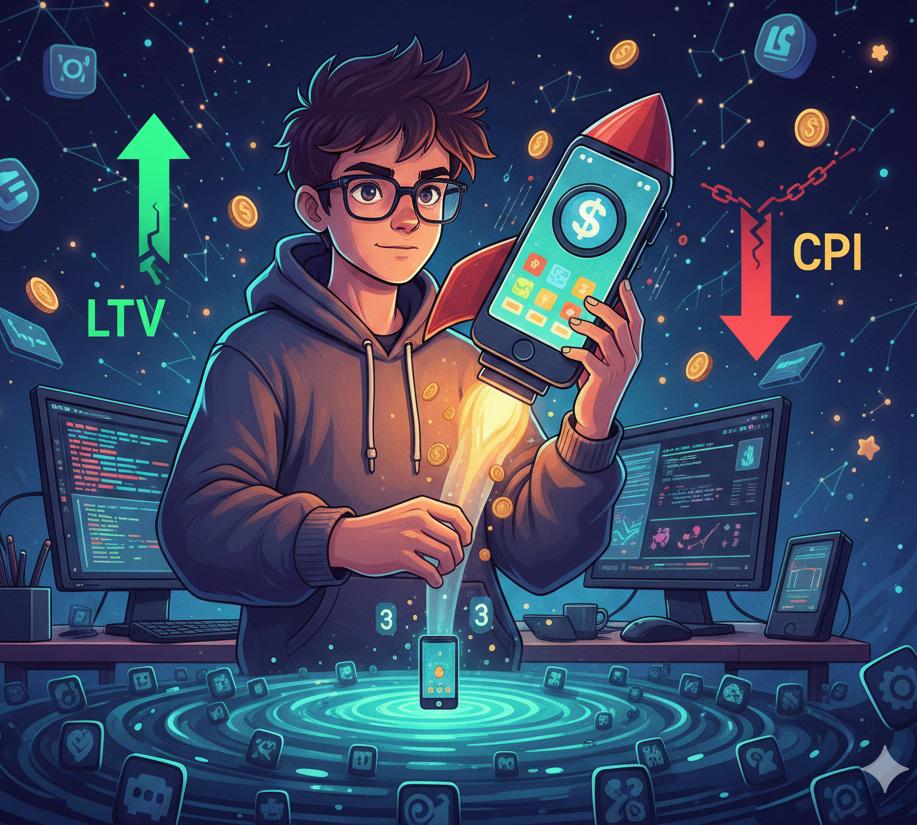
A week later, you check the analytics... and you have 3 organic installs. Forget getting featured by Apple or Google; your game is lost in a sea of thousands of new releases. The hard truth for indie developers in 2026 is this: building a great game is only half the battle.
The other half is getting people to see it. And that's where User Acquisition (UA) comes in.
What is User Acquisition (UA) and Why You Need It
In simple terms, User Acquisition is the process of getting new people to install your game.
For a big company, this means massive ad campaigns.
For an indie, it means getting smart about where you spend your money and, crucially, making sure that investment pays off.
You've already maxed out your "organic" traffic (free installs from people searching in the store). Now, you need paid UA to give your game the initial push it needs to be seen and start generating word-of-mouth.
Think of paid UA as rocket fuel for your organic visibility. More paid installs lead to more data, better store ranking, and ultimately, more free installs.
Stop UA? Well, prepare for this.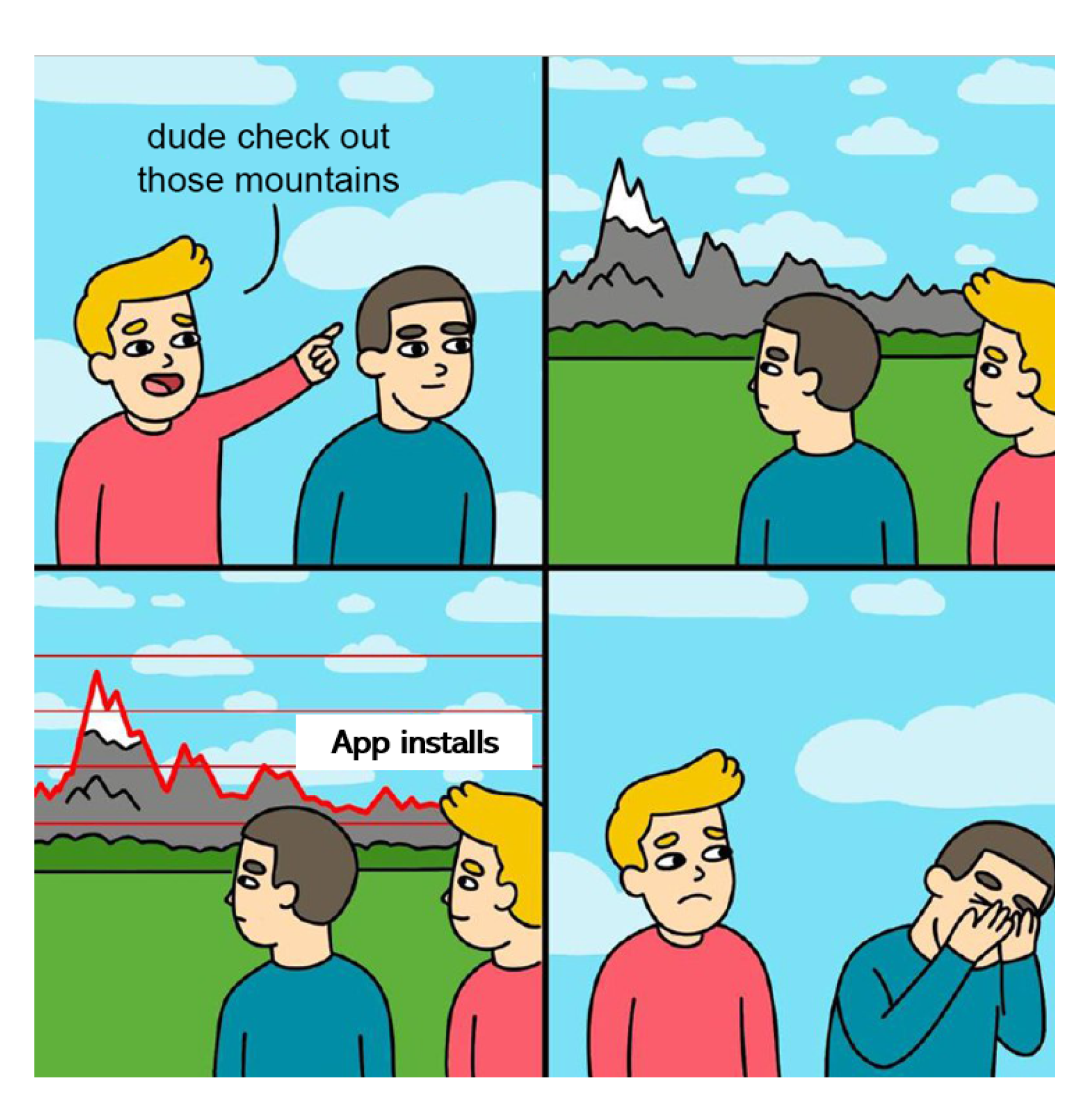
The Dynamic Duo: CPI vs. LTV
When you start buying ads (on platforms like Facebook, Google, or specialized ad networks), you need to understand two key metrics. These are the foundation of all profitable mobile game marketing.
1. What is CPI? (Cost Per Install)
Simple Definition: CPI is the average price you pay every time someone installs your game directly after seeing your ad.
The Math: If you spend $100 on an ad campaign and get 50 installs from it, your CPI is $100 / 50 = $2.00.
Why it Matters: CPI is your cost. You want this number to be as low as possible. It is heavily affected by your ad's quality (the "creative"), your targeting, and market competition.
2. What is LTV? (Lifetime Value)
Simple Definition: LTV (or CLTV, Customer Lifetime Value) is the total revenue you expect to generate from a single player throughout their entire time playing your game.
The Revenue Sources: This includes everything: in-app purchases (IAPs), revenue from rewarded video ads, and any subscription fees.
The Secret Sauce: LTV is heavily influenced by retention. A player who stays in your game for three months and watches 50 ads has a much higher LTV than a player who uninstalls on Day 1.
The Only Equation That Matters
For your game to be profitable and for your marketing efforts to be sustainable, this rule must be true:

If your LTV is higher than your CPI, you are making money. You can afford to spend more to acquire a new user because they will pay you back (and then some) over time. This is how you scale!
If your CPI is higher than your LTV, you are losing money on every single user you acquire. Stop that campaign immediately!
💡 Your Indie Action Plan
As an indie developer in 2026, don't get lost. Focus on these simple steps:
Know Your LTV First: Before you spend a dime on paid ads, you need a good estimate of your LTV. Run a small "soft launch" in specific country (like Canada or UK) to collect real data on how long players stick around and how much they spend/watch ads.
Focus on the Creative: For an indie, a compelling ad is your superpower. Use short, punchy video ads that immediately show the best, most unique part of your gameplay (check out Chop-Chop 9000). This will attract the right kind of user, which naturally lowers your CPI.
Target Narrowly: Don't try to advertise to "everyone who plays games." Start small. Target players who enjoy the most similar, niche competitors to your game. A highly specific audience is almost always cheaper and higher-quality.
The mobile market is competitive, but it’s not an impenetrable fortress. User Acquisition is not about having a million-dollar budget; it's about being data-driven and ensuring that for every dollar you spend bringing a player in, they give you $1.01 back.