

The Coming Consolidation in Mobile Game Creative Production
Ten years ago, mobile user acquisition looked nothing like it does today. UA managers had a long list of ad networks worth testing: Chartboost, Vungle, ironSource, Tapjoy, and more. All competing for the same budgets. Picking channels was a real, ongoing decision.
Today, that list has effectively collapsed to four: AppLovin, Meta, Tiktok and Google. Not because the others vanished overnight, and not because of some marketing war. They lost because they couldn't consistently deliver performance at scale. The networks that could, earned the trust (and the budget) to become the default.
We think mobile game creative production is heading toward the same outcome.
A familiar shape
Right now, creative production looks a lot like UA did in its fragmented era. Traditional agencies, freelancer networks, in-house teams, and a growing wave of AI-powered tools are all solving some version of the same problem: getting studios enough winning ad creative, fast enough, to keep UA campaigns fed.
You can already see two broad camps forming.
Control-first tools. Built for teams that want to stay deeply hands-on. Granular editing, full creative control, more complexity in exchange for more precision. Powerful, but they assume the studio already has a strong internal creative process and just needs better tooling to execute it.
Automation-first tools. Built around removing the manual bottleneck entirely, starting from the idea itself rather than the editing timeline. This is where AdSpawn sits: less about giving a creative team more levers to pull, more about generating strong creative output without needing a creative team to operate the machine.
Neither camp is objectively right. They serve different studios at different stages, with different internal resources and different appetites for control versus speed.
Fragmentation doesn't last
Markets like this don't stay fragmented forever. UA didn't. Programmatic ad exchanges didn't. App store discovery didn't. Every time a market has this many players solving the same underlying problem in different ways, it eventually consolidates around whoever proves, repeatedly, that they deliver.
Not whoever has the most features. Not whoever raised the most money. Not whoever has the loudest launch post. The channels that ended up dominating UA spend won because performance data doesn't lie over a long enough time horizon, and budget follows what actually works.
Creative production will consolidate on the same kind of evidence: does the output actually move performance? And does it keep moving performance over months, not just in a flashy first test?
What "real value" actually looks like here
For a creative partner, real value isn't one great ad, or even one great pilot month. It's the same result showing up consistently enough that a studio has no reason to keep shopping around - which is, not coincidentally, the same standard studios apply to their own games. Retention is the metric that decides whether a game survives past its first week. We think delivery consistency is the metric that will decide which creative partners survive past their first pilot.
That's the bar we've built AdSpawn around: not being the tool with the most dials to turn, but being the partner studios don't have to think twice about once they've tested us.
Where this leaves the market
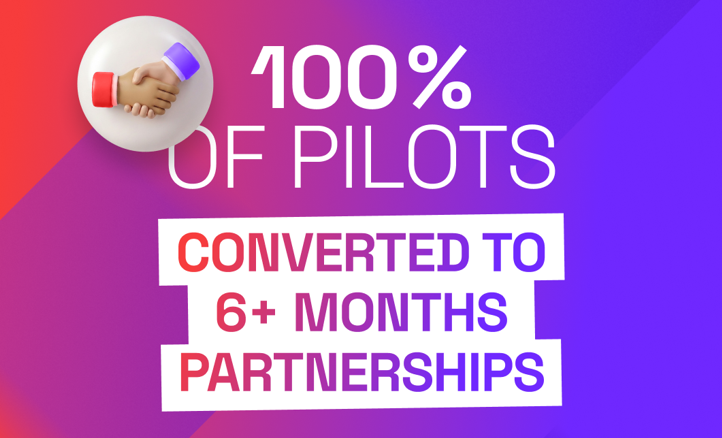
In a few years, we don't expect today's list of creative tools and agencies to look anything like it does now. Some will stay relevant as specialized options for studios that want deep manual control. Most of the volume, though, will move toward a small number of partners that have proven pilot after pilot, studio after studio, that they can be trusted with a growing share of the creative pipeline.
Just like UA settled around a handful of channels that earned the spend, creative production will settle around a handful of partners that earned the trust. We're building AdSpawn to be one of them.